
Family caregiving can affect your finances in several ways, from out-of-pocket medical and household costs to missed work, changes to savings, and other financial responsibilities. At the same time, caring for a loved one can be a meaningful role for millions of Americans.
Roughly 1 in 4 U.S. adults is a family caregiver, and this can mean providing daily assistance as well as financial support.¹ November is National Family Caregivers Month, making it an important time to recognize the people who provide care, often unpaid, to family members, friends, and loved ones.
In this article, we’ll go over average costs, budgeting strategies, and available resources that may help you figure out how to manage the cost of financial caregiving.
How Does Family Caregiving Affect Your Finances?
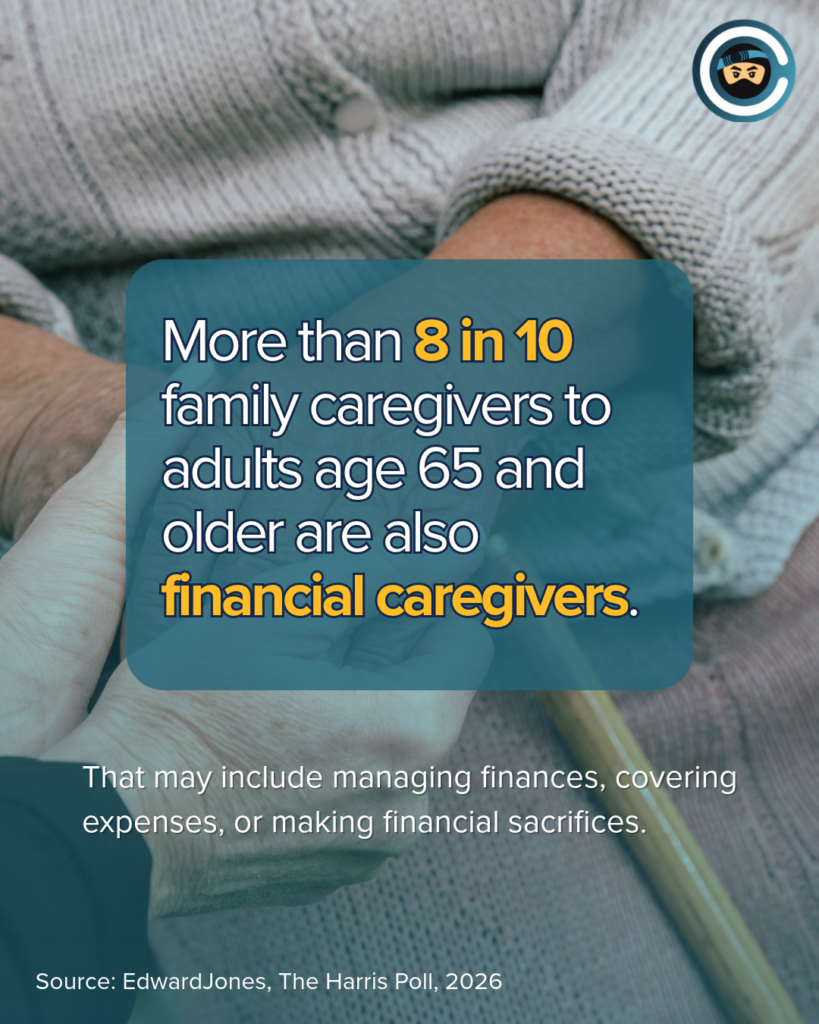
Family caregiving can affect your finances in several ways, including covering expenses for a loved one, reducing savings, taking money from retirement accounts, or taking on additional debt. These responsibilities are common among caregivers. According to an Edward Jones study, more than 8 in 10 caregivers of adults age 65 and older also serve as financial caregivers.² This can include managing a loved one’s finances, paying for expenses with their own money, or other financial sacrifices.
Those responsibilities can have a noticeable impact on a caregiver’s own finances. In the same study, 49% of caregivers to adults 65 and older reported making personal financial sacrifices to provide care. That figure was even higher (at 64%) among caregivers to adults with disabilities.
The financial impact can also extend to ongoing out-of-pocket costs. AARP’s 2026 Caregiving Out-of-Pocket Costs Study found that caregivers spend an average of $11,508 annually out of pocket, representing about 31% of household income on average.³
Medical care costs alone account for about 29% of caregiving spending, but caregivers may also face other expenses and financial changes, including:
- Housing costs, which make up the largest share of average out-of-pocket caregiving costs.
- Food and everyday household essentials.
- Reduced work hours or missed income.
- Changes to savings, debt, and retirement contributions.
What Are the Most Common Expenses for Family Caregivers?
Common caregiving expenses can include medical expenses, transportation, household costs, and additional care services.
| Expense | Examples |
| Medical care | Prescriptions, copays, medical supplies |
| Transportation | Gas, parking, trips to appointments |
| Household needs | Groceries, utilities, housing |
| Additional care | Home health aides, respite services |
It’s important to note that caregiving costs can vary depending on the level of care needed, available insurance coverage, and resources already available to the person receiving care. These expenses can also change over time as care needs evolve.
Because caregiving responsibilities are not always planned in advance, families may need to adjust their finances as new expenses arise. In the same Edward Jones study, only 33% of financial caregivers said their caregiving role had been planned and discussed ahead of time. Understanding potential costs can make it easier to start preparing for what may come with caregiving later.
5 Ways to Manage the Financial Stress of Caregiving
Managing caregiving expenses can feel easier when you have a clearer picture of your costs, available resources, and your own financial priorities. These five steps can help you start planning.
1. Create a Budget for Caregiving Expenses
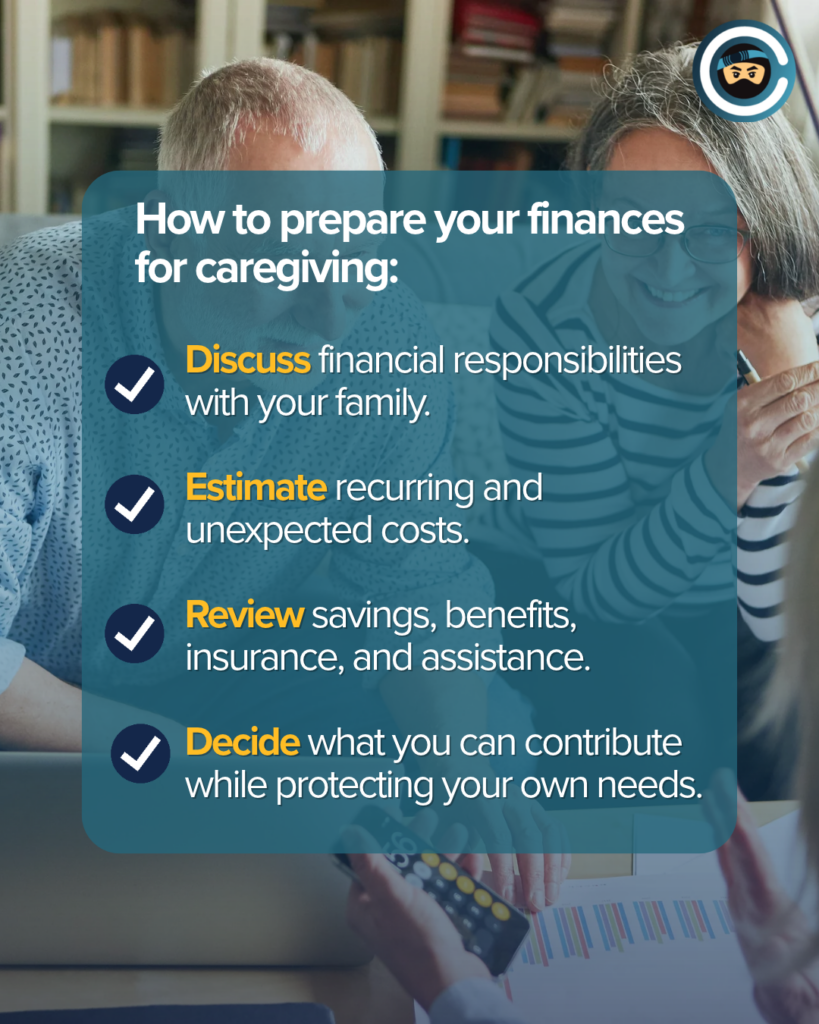
To create a budget, start by tracking recurring and occasional expenses separately, including costs that might otherwise go unnoticed. Reviewing what you spend on transportation, medical needs, food, household expenses, and other care can help you see where the money is going and plan for upcoming costs.
2. Plan Ahead for Unexpected Costs
Discuss financial responsibilities with your family, including setting aside funds when possible and identifying potential expenses, such as home modifications or additional medical equipment. Including room in your budget for potential caregiving expenses may help you feel more prepared if needs change.
3. Review Insurance Coverage and Benefits
Be sure to review any insurance coverage and benefits your loved one currently has or may qualify for, including Medicare, Medicaid, private insurance, or other applicable programs. Understanding what is covered and what may need to be paid out of pocket can help you plan. Remember that coverage and eligibility vary by program and individual circumstances.
4. Explore Financial Assistance Programs
Depending on your family’s circumstances and location, government, nonprofit, community, or employer programs may help with certain caregiving costs or services. Eligibility and available benefits vary, so review the requirements carefully for each program before including potential assistance in your budget.
5. Protect Your Own Financial Well-Being
Consider how much you can reasonably contribute while still accounting for your own savings, bills, debt obligations, and long-term financial goals. Reviewing both your immediate caring responsibilities and your own financial needs can help you make more informed decisions.
Now that we’ve explored the steps you can take to help manage the financial stress of caregiving, let’s dive deeper into what financial assistance may be available to you.
What Financial Support and Resources Are Available for Family Caregivers?
Financial support and resources for family caregivers may include Medicaid programs, VA caregiver benefits, employer or state leave programs, and local or nonprofit services, depending on eligibility and location.
- Medicaid home- and community-based services: Some state Medicaid programs provide services that help eligible individuals receive care at home or in the community.
- Area Agencies on Aging and the Eldercare Locator: These resources can connect caregivers with local programs and services.
- VA caregiver support programs: Eligible veterans and their families may have access to caregiver support through the Department of Veterans Affairs.
- Employer benefits and state programs: Paid or unpaid leave and other workplace benefits vary by employer and state.
- Nonprofit and local community organizations: Local organizations may provide transportation, food, respite care, or other support.
Keep in mind that eligibility, funding, and available services vary, and not every caregiver will qualify for direct payments or benefits.
How Can You Prepare Financially for Long-Term Caregiving?
As mentioned above, one of the more helpful ways to prepare financially for family caregiving is to plan ahead. Proactive planning can give families a clearer idea of potential care costs and available resources. It can also make it easier to discuss expectations before circumstances change and reduce uncertainty.
These conversations aren’t always the most comfortable, but they can have quite an impact in the long run. Talk with family members about shared responsibilities, organize financial documents, review anticipated care needs, and revisit the plan as circumstances change.
FAQs about Financial Caregiving
Can family caregivers get paid for providing care?
Some family caregivers may qualify for payment through certain Medicaid, VA, state, or other programs, depending on the caregiver, care recipient, location, and program requirements.
How can caregivers budget for caregiving expenses?
Start by tracking recurring caregiving costs, such as medical expenses, transportation, groceries, and additional care services. Reviewing these expenses regularly can help you understand where your money is going and adjust accordingly as needs change.
How can families prepare financially for caregiving?
Families can prepare by discussing caregiving responsibilities ahead of time, reviewing insurance and benefits, organizing important financial documents, and estimating potential care-related costs. Revisiting the plan as circumstances change can also help everyone stay informed about what to do next.
Final Thoughts from CreditNinja on Finding Financial Caregiving Support
Financial caregiving can be challenging, but resources may be available to help with certain costs. Understanding the potential expenses, exploring assistance options, and planning ahead can help you make informed decisions that also keep your own financial priorities in mind.
For more financial education resources, explore CreditNinja’s guides on budgeting, saving, and managing unexpected expenses.
Sources